Эмбриогенез. Формирование Центральной Нервной Системы
Головной мозг
На границе между головой и телом эмбрион имеет резко выраженный шейный С-образный изгиб. В результате голова начинает приближаться к сердечному выступу все теснее. У таких зародышей наибольшей длиной тела становится расстояние между вершиной шейного изгиба и копчикомНервная трубка краниальнее 4-й пары сомитов превращается в головной мозг.
Передний Мозг
В течение 5-й недели передний мозг(forebrain) частично подразделяется на два пузыря конечный мозг = телэнцефалон (telencephalon) и промежуточный = диэнцефалон (diencephalon), а задний мозг частично подразделяется на два пузыря задний мозг = метэнцефалон (metencephalon) и продолговатый мозг = миелэнцефалон (myelencephalon) (рис.1 Б)
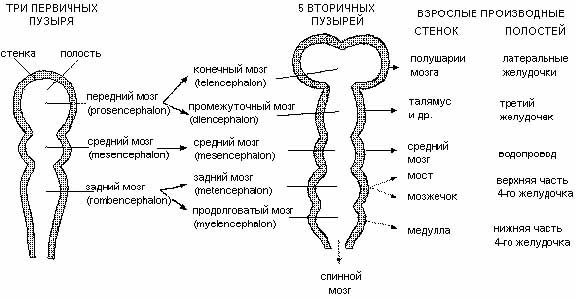
Рис. 1. Схема пузырей головного мозга и их взрослые производные. Ростральная (передняя) часть третьего желудочка происходит из полости промежуточного мозгаFig.1. Diagrammatic sketches of the brain vesicles, indicating the adult derivatives of their walls and cavities. *The rostral (anterior) part of the third ventricle forms from the cavity of the telencephalon; most of the third ventricle is derived from the cavity of the diencephalon (From Moore K.L. (1988) )
Передний мозг
Первоначально развивающийся головной мозг имеет ту же самую основноую структуру что и развивающийся спинной мозг. Однако изгибы головного мозга вызывают существенное изменение в положении cерого и белого вещества. Sulcus limitans доходит краниально только до соединения между средним и передним мозгом.

Рис. 2. А - развивающийся головной мозг в конце 5-й недели. Видны три первичных подразделения головного мозга и изгитбы. Б - поперечный разрез через каудальную часть миэлэнцефалона (дающей закрытую часть медулла). В и Г - сходные поперечные разрезы через ростральную часть миелэнцефалона (дающей "открытую" часть медулла. Показано положение и последовательные стадии дифференцировки алярной и базальной пластинок. Стрелками на рис. В показано направление роста нейробластов от алярных пластинок к формирующимся ядрам олив
1 - среднемозговой изгиб, 2 - развивающийся мозжкечок, 3 - изгиб моста (pontine flexure), 4 - medulla, 5 - кровеносный сосуд, 6 - спинной мозг, 7 - центральный канал, 8 - ядро gracile, 9 - ядро cuneate, 10 - центральное серое вещество, 11 - пирамидальные пути (кортикоспинальные волокна), 12 - алярная пластинка, 13 - базальная пластинка, 14 - sulcus limitans, 15 - эпендимная крыша, 16 - специальные соматические афферентные волокна, 17 - общие соматичепские афферентные, 18 - специальные висцеральные эфферентные, 19 - общие висцеральные афферентные волокна, 20 - tela choroidea, 21 - хороидальное сплетение, 22 - специальные висцеральные эфферентные, 23 - общие соматические эфферентные, 24 - olivary nucleusFig.2. A, Sketch of the developing brain at the end of the fifth week, showing the three primary divisions of the brain and the brain flexures. B, Transverse section through the caudal part of the myelencephalon (developing closed part of the medulla). C and D, Dimilar sections through the rostral part of the myelencephalon (developing "open" part of the medulla), showing the position and successive stages of differentiation of the alar and basal plates. The arrows in C show the pathway taken by neuroblasts from the alar plates to form the olivary nuclei
1 - midbrain flexure 2 - cerebellum, 3 - pontine flexure, 4 - medulla, 5 - blood vessel, 6 - spinal cord, 7 - central canal, 8 - gracileucleus, 9 - cuneate nucleus, 10 - central grey matter, 11 - pyramids (composed of corticospinal fibers), 12 - alar plate, 13 - basal plate, 14 - sulcus limitans, 15 - ependymal roof, 16 - special somatic afferent, 17 - general sonatic afferent, 18 - special visceral afferent, 19 - general visceral afferent, 20 - tela choroidea, 21 - choroid plexus, 22 - special visceral efferent, 23 - general visceral efferent, 24 - olivary nucleus (From Moore K.L. (1988) )
Средний мозг В течение 4-й недели мозг быстро растет и сгибается вентрально, образуя головную складку. Дальнейший рост ведет к возникновению дополнительных изгибов головного мозга. Образуется изгиб среднего мозга (midbrain flexure).
Из структур, характерных для спинного мозга, различимы только алярные и базальные пластинки в среднем и заднем мозге.

Рис. 3. А - развивающийся головной мозг в конце 5-й недели. Б - поперечный разрез через метэнцефалон (развивающийся мост и мозжечок). В и Г - продольные разрезы через задний мозг в 6 и 17 недель
1 - изгиб среднего мозга, 2 - развивающийся мозжечок, 3 - pontine flexure, 4 - медулла, 5 - кровеносный сосуд, 6 - спинной мозг, 7 - шейный изгиб, 8 - соматические афферентные волокна, 9 - общие висцеральные афферентные, 10 - общие висцеральные эфферентные, 11 - мягкая оболочка, 12 - эпендимная крыша, 13 - развивающийся мозжечок, 14 - pontine nucleus, 15 - соматические эфферентные, 16 - специальные висцеральные эфферентные, 17 - средний мозг, 18 - развивающаяся передняя доля мозжечка, 19 - nodule, 20 - хороидальное сплетение, 21 - tela choroidea, 22 - мост, 23 - передняя доля (paleocerebellum), 24 - церебральный водопровод, 25 - первичная щель, 26 - задняя доля (neocerebellum), 27 - floculo-nodular Fig.3. A, Sketch of the developing brain at the end of the fifth week. B, Transverse section through the metencephalon (developing pons and cerebellum), showing the derivatives of the alar and basal plates. C and D, Sagittal sections of the hindbrain at six and 17 weeka, respectively, showing succrssive stage in the development of the pons and cerebellum
1 - midbrain flexure 2 - cerebellum, 3 - pontine flexure, 4 - medulla, 5 - blood vessel, 6 - spinal cord, 7 - cervical flexure, 8 - special somatic afferent, 9 - general somatic afferent, 10 - general visceral afferent, 11 - pia matter, 12 - ependymal roof, 13 - developing cerebellum, 14 - pontine nucleus, 15 - special somatic efferent, 16 - special visceral afferent, 17 - midbrain, 18 - developing anterior lobe of cerebellum, 19 - nodule, 20 - choroid plexus, 21 - tela choroidea, 22 - pons, 23 - anterior lobe (paleocerebellum), 24 - cerebral aquueduct, 25 - primary fissure, 26 - posterior lobe (neo cerebellum), 27 - floculo-nodular (From Moore K.L. (1988) )
Задний мозг
Образуется шейный изгиб (cervical flexure) в месте соединения заднего мозга со спинным . Несколько позднее между изгибом среднего мозга и шейным изгибом формируется изгиб моста (pontine flexure) в противоположном направлении. Этот изгиб ведет к истончению крыши заднего мозга (Рис.1)
Спинной Мозг
Первоначально стенка нервной трубки состоит из однородных нейроэктодермальных клеток - медуллобластов, которые усиленно размножаются путем кариокинеза и располагаются в окружности просвета нервной трубки напдобие ложномногорядного эпителия. Особенно интенсивно эти клетки делятся в области боковых стенок нервной трубки, которые поэтому резко утолщаются, в то время как вентральная и дорсальная стенки отстают в росте и остаются тонкими. Вслед за этим наступает дифференцировка клеток нервной трубки, которая происходит в двух различных направлениях: одни клетки становятся спонгиобластами, из которых в дальнейшем образуется нейроглия, ждругие превращаются в нейробласты, т.е родоначальники всех будущих нейронов.
Спонгиобласты и нейробласты вначале располагаются в окружности просвета нервной трубки, образуя широкий эпендимный слой. По мере развития нейробласты и часть спонгиобластов выделяются из него в толщу нервной трубки, давая начало среднему ее слою, который носит название плащевого или мантийного. Из него в дальнейшем образуется серое вещество спинного мозга.


Вверху слева, поперечный разрез зачатка спинного мозга. Зародыш длиной 8 мм.
1 - покровная пластинка (крыша нервной трубки; 2 - дорсальный отдел плащевого слоя - зачаток будущего заднего рога; 3 - эпендимный слой; 4 - вентральный отдел плащевого слоя - зачаток переднего рога; 5 - участок, где спонгиобласты сохраняют свою первичную форму и дают начало эпендиме (дно нервной трубки); 6 - зачаток передних канатиков белого вещества; 7 - закладка боковых канатиков; 8 - sulcus limitans, отделяющая зачаток заднего рога от переднего; 9 - зачаток задних канатиков; 10 полость нервной трубки.
Вверху справа, поперечный разрез грудного отдела спинного мозга. Зародыш длиной 8 мм.
1 - задний корешок; 2 - спинальный ганглий; 3 - передний корешок; 4 - спинальный нерв; 5 - зачаток заднего канатика; 6 - эпенщдимный слой; 7 - зачаток переднего рога; 8 - зачаток переднего канатика; 9 - хорда.
Внизу, поперечный разрез нервной трубки в каудальном отделе того же зародыша. Нервная трубка здесь значительно меньше дифференцирована по сравнению с более краниальными ее отделами. Полость ее имеет вид узкой щели.
1 - просвет нервной трубки; 2 - эпендимный слой; 3 - спинальный ганглий; 4 - хорда; 5 - миотом; 6 - передний корешок
Позже всех образуется наружный слой нервной трубки (краевая вуаль), состоящий из отростков нейробластов, которые выходя за пределы плащевого слоя, заворачиваются кверху и идут вдоль спинного мозга. Краевая вуаль представляет собой закладку будущего белого вещества спинного мозга. На дорсальной стороне нервной трубки этот слой резко утолщается за счет врастания в него заднекорешковых волокон, которые у зародышей длиной 8-14 мм образуют два хорошо заметных пучка. Из них в дальнейшем формируются задние канатики белого вещества спинного мозга.
Количество нейробластов в составе плащевого слоя продолжает нарастать как за счет их митотического деления (которое наблюдается до тех пор, пока они лишены отростков), так и за счет выселения новых клеток из камбиальногго эпендимного слоя. Особенно интенсивно процессы размножения и выселения клеток происходят в вентральных отделах плащевого слоя. В результате этого они значительно утолщаются и выступаеют вперед. На границе между ними и более тонкими дорсальными отделами плащевого слоя в стенке нервной трубки образуется продольная бороздка - sulcus limitans или s. lateralis. Эта бороздка тянется вдоль всего спинного мозга и проникает далеко в зачаток головного мозга. В процессе развития из внентральных отделов плащевого слоя возникают передние столбы, или рога, серого вещества спинного мозга, а из дорсальных его отделов - задние рога.
Эмбрионы кур (ст.)
Эмбрионы мыши
Fig.1. Diagrammatic sketches of the brain vesicles, indicating the adult derivatives of their walls and cavities. *The rostral (anterior) part of the third ventricle forms from the cavity of the telencephalon; most of the third ventricle is derived from the cavity of the diencephalon (From Moore K.L. (1988) )
Передний мозг
Первоначально развивающийся головной мозг имеет ту же самую основноую структуру что и развивающийся спинной мозг. Однако изгибы головного мозга вызывают существенное изменение в положении cерого и белого вещества. Sulcus limitans доходит краниально только до соединения между средним и передним мозгом.
1 - среднемозговой изгиб, 2 - развивающийся мозжкечок, 3 - изгиб моста (pontine flexure), 4 - medulla, 5 - кровеносный сосуд, 6 - спинной мозг, 7 - центральный канал, 8 - ядро gracile, 9 - ядро cuneate, 10 - центральное серое вещество, 11 - пирамидальные пути (кортикоспинальные волокна), 12 - алярная пластинка, 13 - базальная пластинка, 14 - sulcus limitans, 15 - эпендимная крыша, 16 - специальные соматические афферентные волокна, 17 - общие соматичепские афферентные, 18 - специальные висцеральные эфферентные, 19 - общие висцеральные афферентные волокна, 20 - tela choroidea, 21 - хороидальное сплетение, 22 - специальные висцеральные эфферентные, 23 - общие соматические эфферентные, 24 - olivary nucleus
Fig.2. A, Sketch of the developing brain at the end of the fifth week, showing the three primary divisions of the brain and the brain flexures. B, Transverse section through the caudal part of the myelencephalon (developing closed part of the medulla). C and D, Dimilar sections through the rostral part of the myelencephalon (developing "open" part of the medulla), showing the position and successive stages of differentiation of the alar and basal plates. The arrows in C show the pathway taken by neuroblasts from the alar plates to form the olivary nuclei
1 - midbrain flexure 2 - cerebellum, 3 - pontine flexure, 4 - medulla, 5 - blood vessel, 6 - spinal cord, 7 - central canal, 8 - gracileucleus, 9 - cuneate nucleus, 10 - central grey matter, 11 - pyramids (composed of corticospinal fibers), 12 - alar plate, 13 - basal plate, 14 - sulcus limitans, 15 - ependymal roof, 16 - special somatic afferent, 17 - general sonatic afferent, 18 - special visceral afferent, 19 - general visceral afferent, 20 - tela choroidea, 21 - choroid plexus, 22 - special visceral efferent, 23 - general visceral efferent, 24 - olivary nucleus (From Moore K.L. (1988) )
Средний мозг В течение 4-й недели мозг быстро растет и сгибается вентрально, образуя головную складку. Дальнейший рост ведет к возникновению дополнительных изгибов головного мозга. Образуется изгиб среднего мозга (midbrain flexure). Из структур, характерных для спинного мозга, различимы только алярные и базальные пластинки в среднем и заднем мозге.
1 - изгиб среднего мозга, 2 - развивающийся мозжечок, 3 - pontine flexure, 4 - медулла, 5 - кровеносный сосуд, 6 - спинной мозг, 7 - шейный изгиб, 8 - соматические афферентные волокна, 9 - общие висцеральные афферентные, 10 - общие висцеральные эфферентные, 11 - мягкая оболочка, 12 - эпендимная крыша, 13 - развивающийся мозжечок, 14 - pontine nucleus, 15 - соматические эфферентные, 16 - специальные висцеральные эфферентные, 17 - средний мозг, 18 - развивающаяся передняя доля мозжечка, 19 - nodule, 20 - хороидальное сплетение, 21 - tela choroidea, 22 - мост, 23 - передняя доля (paleocerebellum), 24 - церебральный водопровод, 25 - первичная щель, 26 - задняя доля (neocerebellum), 27 - floculo-nodular
Fig.3. A, Sketch of the developing brain at the end of the fifth week. B, Transverse section through the metencephalon (developing pons and cerebellum), showing the derivatives of the alar and basal plates. C and D, Sagittal sections of the hindbrain at six and 17 weeka, respectively, showing succrssive stage in the development of the pons and cerebellum
1 - midbrain flexure 2 - cerebellum, 3 - pontine flexure, 4 - medulla, 5 - blood vessel, 6 - spinal cord, 7 - cervical flexure, 8 - special somatic afferent, 9 - general somatic afferent, 10 - general visceral afferent, 11 - pia matter, 12 - ependymal roof, 13 - developing cerebellum, 14 - pontine nucleus, 15 - special somatic efferent, 16 - special visceral afferent, 17 - midbrain, 18 - developing anterior lobe of cerebellum, 19 - nodule, 20 - choroid plexus, 21 - tela choroidea, 22 - pons, 23 - anterior lobe (paleocerebellum), 24 - cerebral aquueduct, 25 - primary fissure, 26 - posterior lobe (neo cerebellum), 27 - floculo-nodular (From Moore K.L. (1988) )
Задний мозг
Образуется шейный изгиб (cervical flexure) в месте соединения заднего мозга со спинным . Несколько позднее между изгибом среднего мозга и шейным изгибом формируется изгиб моста (pontine flexure) в противоположном направлении. Этот изгиб ведет к истончению крыши заднего мозга (Рис.1)
Спинной Мозг
Первоначально стенка нервной трубки состоит из однородных нейроэктодермальных клеток - медуллобластов, которые усиленно размножаются путем кариокинеза и располагаются в окружности просвета нервной трубки напдобие ложномногорядного эпителия. Особенно интенсивно эти клетки делятся в области боковых стенок нервной трубки, которые поэтому резко утолщаются, в то время как вентральная и дорсальная стенки отстают в росте и остаются тонкими. Вслед за этим наступает дифференцировка клеток нервной трубки, которая происходит в двух различных направлениях: одни клетки становятся спонгиобластами, из которых в дальнейшем образуется нейроглия, ждругие превращаются в нейробласты, т.е родоначальники всех будущих нейронов.
Спонгиобласты и нейробласты вначале располагаются в окружности просвета нервной трубки, образуя широкий эпендимный слой. По мере развития нейробласты и часть спонгиобластов выделяются из него в толщу нервной трубки, давая начало среднему ее слою, который носит название плащевого или мантийного. Из него в дальнейшем образуется серое вещество спинного мозга.
Вверху слева, поперечный разрез зачатка спинного мозга. Зародыш длиной 8 мм.
1 - покровная пластинка (крыша нервной трубки; 2 - дорсальный отдел плащевого слоя - зачаток будущего заднего рога; 3 - эпендимный слой; 4 - вентральный отдел плащевого слоя - зачаток переднего рога; 5 - участок, где спонгиобласты сохраняют свою первичную форму и дают начало эпендиме (дно нервной трубки); 6 - зачаток передних канатиков белого вещества; 7 - закладка боковых канатиков; 8 - sulcus limitans, отделяющая зачаток заднего рога от переднего; 9 - зачаток задних канатиков; 10 полость нервной трубки.
Вверху справа, поперечный разрез грудного отдела спинного мозга. Зародыш длиной 8 мм.
1 - задний корешок; 2 - спинальный ганглий; 3 - передний корешок; 4 - спинальный нерв; 5 - зачаток заднего канатика; 6 - эпенщдимный слой; 7 - зачаток переднего рога; 8 - зачаток переднего канатика; 9 - хорда.
Внизу, поперечный разрез нервной трубки в каудальном отделе того же зародыша. Нервная трубка здесь значительно меньше дифференцирована по сравнению с более краниальными ее отделами. Полость ее имеет вид узкой щели.
1 - просвет нервной трубки; 2 - эпендимный слой; 3 - спинальный ганглий; 4 - хорда; 5 - миотом; 6 - передний корешок
Позже всех образуется наружный слой нервной трубки (краевая вуаль), состоящий из отростков нейробластов, которые выходя за пределы плащевого слоя, заворачиваются кверху и идут вдоль спинного мозга. Краевая вуаль представляет собой закладку будущего белого вещества спинного мозга. На дорсальной стороне нервной трубки этот слой резко утолщается за счет врастания в него заднекорешковых волокон, которые у зародышей длиной 8-14 мм образуют два хорошо заметных пучка. Из них в дальнейшем формируются задние канатики белого вещества спинного мозга.
Количество нейробластов в составе плащевого слоя продолжает нарастать как за счет их митотического деления (которое наблюдается до тех пор, пока они лишены отростков), так и за счет выселения новых клеток из камбиальногго эпендимного слоя. Особенно интенсивно процессы размножения и выселения клеток происходят в вентральных отделах плащевого слоя. В результате этого они значительно утолщаются и выступаеют вперед. На границе между ними и более тонкими дорсальными отделами плащевого слоя в стенке нервной трубки образуется продольная бороздка - sulcus limitans или s. lateralis. Эта бороздка тянется вдоль всего спинного мозга и проникает далеко в зачаток головного мозга. В процессе развития из внентральных отделов плащевого слоя возникают передние столбы, или рога, серого вещества спинного мозга, а из дорсальных его отделов - задние рога.
Эмбрионы кур (ст.)
Эмбрионы мыши
Спинной Мозг
Вверху слева, поперечный разрез зачатка спинного мозга. Зародыш длиной 8 мм.
1 - покровная пластинка (крыша нервной трубки; 2 - дорсальный отдел плащевого слоя - зачаток будущего заднего рога; 3 - эпендимный слой; 4 - вентральный отдел плащевого слоя - зачаток переднего рога; 5 - участок, где спонгиобласты сохраняют свою первичную форму и дают начало эпендиме (дно нервной трубки); 6 - зачаток передних канатиков белого вещества; 7 - закладка боковых канатиков; 8 - sulcus limitans, отделяющая зачаток заднего рога от переднего; 9 - зачаток задних канатиков; 10 полость нервной трубки.
Вверху справа, поперечный разрез грудного отдела спинного мозга. Зародыш длиной 8 мм.
1 - задний корешок; 2 - спинальный ганглий; 3 - передний корешок; 4 - спинальный нерв; 5 - зачаток заднего канатика; 6 - эпенщдимный слой; 7 - зачаток переднего рога; 8 - зачаток переднего канатика; 9 - хорда.
Внизу, поперечный разрез нервной трубки в каудальном отделе того же зародыша. Нервная трубка здесь значительно меньше дифференцирована по сравнению с более краниальными ее отделами. Полость ее имеет вид узкой щели.
1 - просвет нервной трубки; 2 - эпендимный слой; 3 - спинальный ганглий; 4 - хорда; 5 - миотом; 6 - передний корешок