Эмбриогенез. Формирование Центральной Нервной Системы
Передний Мозг
Границы нейромеров в переднем мозге могут быть выявлены на этой стадии развития по характерным поперечным пучкам волокон. Обнаруживается ростролатеральное продолжение комплекса субстанции nigra под pretectum, который занимает базальную пластинку просомера р1 диэнцефалона. На этой стадии он практически слит с каудальным компонентом в среднем мозге. TH-IR нейроны в базальной области р2 или задних бугорках (tuberculum posterior) (под дорсальным талямусом) лежат более медиально и представляют собой другую часть конвенциональной субстанции nigra. Базальная область р3 сегмента лежит под вентральным талямусом и содержит отдельную группу TH-IR retromammillary клеток, которая теперь имеет характерное слоистое проявление.
Донная пластинка диэнцефалона, соответствующая р1-р2, обнаруживает рострально уменьшенную популяцию мелких TH-IR нейронов, которые вместе формируют ростральную часть вентральной тегментальной области.
Алярная группа клеток теперь лучше развита в эпиталамической или habenular области р2, которая окружает ножку эпифиза, и в популяции зоны incerta р3, которая соответствует группе зрелых клеток А13. Некоторые изолированные остатки дорсальных клеток в р1 (в задней коммиссуре) и в р3 (во фронтальной части зоны limitans) тем не менее обнаруживаются.
Нейроны TH-IR базальной пластинки во вторичном прозэнцефалоне (конечном мозге) обнаруживаются в mammillary body и в tuberomammillary region в р4, где персистирует существенная популяция, и вдоль латерального гипоталямуса в р4, р5 и р6, формируя нерегулярный продольный тяж (string) клеток. Граница р4/р5 резко отделяет tuberomammillary клетки от tuberal hypothalamus. Последний тиакже содержит редкие TH-IR клетки простпективной группы клеток А12.
Продольные пучки TH-IR клеток в аляной пластинке р4-р6 распространяются в retrochiasmatic область, несколько дорсальнее расположенную по отношению к базальным клеткам в латеральном гипоталямусе. Самая большая алярная популяция в этом секторе головного мозга все еще обнаруживается в р4 и она перекрывает сайт паравентрикулярного ядра. От перивентрикулярного локуса ряд TH-IR клеток также идет в направлении поверхности головного мозга вдоль искривленных глиальных радиальных линий, ведущих в сайт супраоптического ядра. Менее многочисленные перивентрикулярные клетки вдоль р5 и р6 оккупируют дорсовентральное положение, сходное с таковым паравентрикулярного ядра в р4 (сопровождение magnocellular preoptic nucleus). Отдельная мало многочисленная алярная TH-IR популяция (А15) занимает переднюю преоптическую область в р5 и р6 сегментах. Нейральная сетчатка обнаруживает те же самые иммунореактивные клетки.
Обонятельные луковицы содержат TH-IR periglomerular нейроны на этой стадии развития. Терминальные нервы, контактирующие с вентромедиальной частью обонятельных луковиц, обнаруживают многочисленные TH-IR клетки, некоторые из которых,по-видимому, проникают в стенку телэнцефалона. (Puels, Verney ,1998).
Средний Мозг
Катехолэргические клетки в данный период получают почти окончательное свое распределение в среднем мозге. В алярной пластинке TH-IR нейроны отсуствуют в верхних колликулах и ростральной части нижних колликул, хотя такие клетки все еще обнаруживаются в каудальном аспекте нижних колликул. Новая популяция TH-IR клеток алярной пластинке располагается в вентролатеральном продольном столбе внутри проспективной области periaqueductal gray (pag). Базальная пластинка каудодатерально соджержит содержит клетки группы А8. Эта пластинка лежит клином между глазодвигательным ядром и косой isthmomesencephalic границей и может представлять собой производные наиболее каудальных базальных клеток, обнаруживаемых уже у эмбрионов 36 дней развития. Каудальная часть субстанции nigra обнаруживается вентролатерально, латеральнее красного ядра. Область срединной донной пластинки среднего мозга содержит многочисленные клетки каудальной части вентральной тегментальной области, снова с четкой каудальной границей по линии, отграничивающей перешеек. (Puels, Verney ,1998).
Задний Мозг
Межромбомерные вентрикулярные гребни к данному моменту в основном исчезли, однако ромбомерные домены все еще могут быть идентифицированы с помощью фиксированных наружных или внутренних маркеров, таких как корешки краниальных нервов или характерные цитоархитектурные признаки ( в основном двигательные ядра, а также примордии моста, трапецевидного тела и нижних олив). Радиальные кровеносные сосуды помогают выявлять деформированную топологию доменов, производных ромбомеров. Некоторые границы вентрикулярных гребней все еще могут быть различены в наиболее латеральных сагитальных срезах.
В месте перехода от медуллы к спинному мозгу ранее описанный вентролатеральный столб тирозин-гидроксилаза-иммунореактивных (TH-IR) клеток, маркеров нейромеров, может быть идентифицирован как проспективный А1/С1 комплекс ( на этой стадии только наиболее каудальные порции А1 экспрессируют допамин-бета-гидроксилазу (DBH). В медулле этот столб совпадает с ambiguus ядром. ОДнако редко расположенные клетки распространяются в том же самом локусе и вдоль радиальных осей в направлении перивентрикулярного vagal двигательного ядра. Эти глубокие клетки могут быть отнесены к имеющемуся А2/С2 комплексу вместе с онтогенетически отдельной алярной группой TH-IR нейронов в ядре солитарного тракта (solitary tract nucleus). Эта отдельная алярная группа сама по себе является продолжением группы небольших иммунореактивных нейронов в ядрах дорсального столба и в дорсальных рогах спинного мозга. Ряд TH-IR клеток присутствует также в obex области, являясь продолжением группы солитарных клеток, они вносят вклад в популяцию, в последующем обнаруживаемую в area postrema (A2d). А1/С1 и А2/С2 образования формируются в целом внутри рострально хорошо очерченной области заднего мозга, которые развиваются из ромбомеров r7 и r8.
Сегменты r4-r6 продолжают обнаруживать некоторые дорсальные алярные TH-IR нейроны, возможно соответствующие части рострального удлиннения солитарного столба. В r4-r5 сегментах обнаруживаются многочисленные TH-IR нейроны в поверхностном диске вблих зачатка трапецевидного тела. Другие парамедианные клетки перемещаются глубже параллельно шву средней линии. На коронарных срезах через эту область выявляются клетки вблизи шва, продуцируемые локально, ьак как небольшие незрелые иммунореактивные нейроны кажутся частично утопленными в локальную вентрикулярную зону. Они могут оказаться включенными в группу зрелых С3 клеток. На перивентрикулярных уровнях внутри базальной пластинки r5 и в распространяющих косо вентролатеральной области r6 специальная группа малых TH-IR клеток распространяется вдоль и интерстициально по отношению к петле лицевого нерва вблизи ядра abducens. Эти клетки являются остатками ранних TH-IR клеток, связанных с рострокаудальным фациальным миграторным потоком в r5-r6. Вентролатеральные поверхностные TH-IR клетки в r6, которые окружают постмиграторное ядро двигательного лицевого нерва, составляют каудальную часть группы А5 клеток и соответствуют клеткам, выявляемым на более ранних стадиях развития (36-й и 41-й день).
Презумптивная ростральная часть группы клеток А5 появляется в поверхностной части базальной пластинки вблизи ядра двигательного тройничного нерва в r2 и r3 сегментах. Отдельные группы клеток алярной пластинки, по-видимому, смещаются к поверхности в направлении вентролатеральной области моста в r2-r3. Эти популяции являются продолжением глубоко и радиально расположенных клеток, распространяющихся в перивентрикулярную область каудальнее локуса coeruleus (который лежит в r1) и по-видимому, условно может быть включен в subcoeruleus популяцию. Четкие отличия в локусе coeruleus тем не менее демонстрируются тем фактом, что r2-r3 клетки не экспрессируют DBH на этой стадии.
Локус coeruleus (A) теперь занимает свое окночательное (дефинитивное) положение в дорсолатеральной субвентрикулярной алярной зоне r1 и каудальной порции перешейка (часть r1 значительно плотнее), тогда как группа клеток А4 выглядит как отдельная субвентрикулярная алярная группа, помещенная более дорсально в мозжечковую пластинку. (Puels, Verney ,1998).
Спинной Мозг
В результате пролиферации и дифференцировки нейроэпителиальных клеток в развивающемся спинном мозге образуются толстые стенки и тонкие пластинки крыши и дна (Рис.1 и 2 Б).
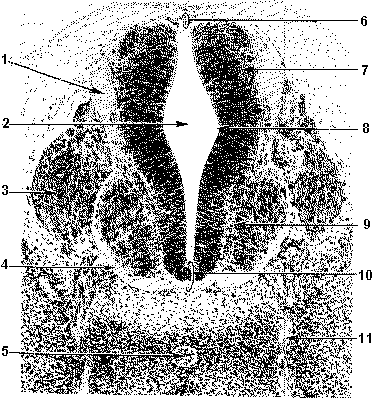
Рис. 1. Поперечный срез через развивающийся спинной мозг эмбриона человека длиной 14 мм (примерно 44-й день). Потолочная (roof) и донная (floor) пластинки не содержат нейробластов и относительно тонки
1 - маргинальная зона, 2 - канал нервной трубки, 3 - спинальный ганглий, 4 - вентральный нервный корешок (rootlet), 5 - хорда, 6 - потолочная пластинка, 7 - алярная пластинка, 8 - sulcus limitans, 9 - базальная пластинка, 10 - донная пластинка, 11 - ствол спинального нерва Fig.1. Photomicrograph of a transverse section of the developing spinal cord in a 14-mm human embryo of about 44 days (x 75). The roof plate and the floor plate contain no neuroblasts and are relatively thin (Courtesy of Dr. J.W.A. Duckworth, Prof. Emeritus of Anatomy, University of Toronto)
На латеральных стенках спинного мозга вскоре возникает неглубокая продольная борозда (sulcus limitans), которая отделяет дорсальную часть, называемую алярной пластинкой (alar plate) от вентральной части, называемой базальной пластинкой (basal plate), которые образуют продольные выпячивания практически по всей длине спинного мозга . Это региональное подразделение имеет важное фундаментальное значение, так как позднее алярная и базальная пластинки ассоциируют с афферентной и эфферентой функциями, соответственно.

Рис. 2. 1 - канал нервной трубки, 2 - нервная трубка, 3 - производные нервного гребня, 4 - маргинальная зона , 5 - алярная пластинка, 6 - ограничивающая борозда (sulcus limitans), 7 - базальная пластинка, 8 - двигательные нейробласты, 9 - потолочная пластинка, 10 - афферентные нейробласты в спинальном ганглии (производные клеток нервного гребня), 11 - донная пластинка, 12 - дорсальный рог (серое вещество), 13 - вентральный рог (серое вещество), 14 - ствол спинального нерва, 15 - дорсальная перегородка, 16 - центральный канал, 17 - белое вещество, 18 - вентральная срединная щель, 19 - внутренняя ограничивающая мембрана, 20 - нейроэпителеиальные клетки, 21 - наружная ограничивающая мембрана, 22 - мезенхима, 23 - делящаяся нейроэпителиальная клетка, 24 - вентрикулярная зона, 25 - промежуточная (мантийная) зонаFig.4. Diagrams illustrating development of spinal cord. A, Transverse section through the neural tube of an embryo of about 23 days. Б и В, Similar sections at six and nine weeks, respectively. Г, Section through the wall of the neural tube shown in A. Д, Section through the wall of developing spinal cord, showing the three different zones. Note that the neural canal of neural tube is converted into the central canal of the spinal cord
1 - neural canal, 2 - neural tube, 3 - derivative of neural crest, 4 - marginal zone, 5 - alar plate, 6 - sulcus limitans, 7 - basal plate, 8 - motor neuroblast, 9 - roof plate, 10 - afferent neuroblasts in spinal ganglion (derived from the neural crest), 11 - floor plate, 12 - dorsal horn (gray matter), 13 - ventral horn (gray matter), 14 - trunk of spinal nerve, 15 - dorsal septum, 16 - central canal, 17 - white matter, 18 - ventral median fissure, 19 - internal limiting membrane, 20 - neuroepithelial cells, 21 - external limiting membrane, 22 - mesemchyme, 23 - dividing neurirpithelial cell, 24 - ventricular zone, 25 - intermediate (mantle) zone, 26 - marginal zone (From Moore K.L. (1988))
Эмбрионы кур (ст. )
Эмбрионы мыши
Средний Мозг
Катехолэргические клетки в данный период получают почти окончательное свое распределение в среднем мозге. В алярной пластинке TH-IR нейроны отсуствуют в верхних колликулах и ростральной части нижних колликул, хотя такие клетки все еще обнаруживаются в каудальном аспекте нижних колликул. Новая популяция TH-IR клеток алярной пластинке располагается в вентролатеральном продольном столбе внутри проспективной области periaqueductal gray (pag). Базальная пластинка каудодатерально соджержит содержит клетки группы А8. Эта пластинка лежит клином между глазодвигательным ядром и косой isthmomesencephalic границей и может представлять собой производные наиболее каудальных базальных клеток, обнаруживаемых уже у эмбрионов 36 дней развития. Каудальная часть субстанции nigra обнаруживается вентролатерально, латеральнее красного ядра. Область срединной донной пластинки среднего мозга содержит многочисленные клетки каудальной части вентральной тегментальной области, снова с четкой каудальной границей по линии, отграничивающей перешеек. (Puels, Verney ,1998).
Задний Мозг
Межромбомерные вентрикулярные гребни к данному моменту в основном исчезли, однако ромбомерные домены все еще могут быть идентифицированы с помощью фиксированных наружных или внутренних маркеров, таких как корешки краниальных нервов или характерные цитоархитектурные признаки ( в основном двигательные ядра, а также примордии моста, трапецевидного тела и нижних олив). Радиальные кровеносные сосуды помогают выявлять деформированную топологию доменов, производных ромбомеров. Некоторые границы вентрикулярных гребней все еще могут быть различены в наиболее латеральных сагитальных срезах.
В месте перехода от медуллы к спинному мозгу ранее описанный вентролатеральный столб тирозин-гидроксилаза-иммунореактивных (TH-IR) клеток, маркеров нейромеров, может быть идентифицирован как проспективный А1/С1 комплекс ( на этой стадии только наиболее каудальные порции А1 экспрессируют допамин-бета-гидроксилазу (DBH). В медулле этот столб совпадает с ambiguus ядром. ОДнако редко расположенные клетки распространяются в том же самом локусе и вдоль радиальных осей в направлении перивентрикулярного vagal двигательного ядра. Эти глубокие клетки могут быть отнесены к имеющемуся А2/С2 комплексу вместе с онтогенетически отдельной алярной группой TH-IR нейронов в ядре солитарного тракта (solitary tract nucleus). Эта отдельная алярная группа сама по себе является продолжением группы небольших иммунореактивных нейронов в ядрах дорсального столба и в дорсальных рогах спинного мозга. Ряд TH-IR клеток присутствует также в obex области, являясь продолжением группы солитарных клеток, они вносят вклад в популяцию, в последующем обнаруживаемую в area postrema (A2d). А1/С1 и А2/С2 образования формируются в целом внутри рострально хорошо очерченной области заднего мозга, которые развиваются из ромбомеров r7 и r8.
Сегменты r4-r6 продолжают обнаруживать некоторые дорсальные алярные TH-IR нейроны, возможно соответствующие части рострального удлиннения солитарного столба. В r4-r5 сегментах обнаруживаются многочисленные TH-IR нейроны в поверхностном диске вблих зачатка трапецевидного тела. Другие парамедианные клетки перемещаются глубже параллельно шву средней линии. На коронарных срезах через эту область выявляются клетки вблизи шва, продуцируемые локально, ьак как небольшие незрелые иммунореактивные нейроны кажутся частично утопленными в локальную вентрикулярную зону. Они могут оказаться включенными в группу зрелых С3 клеток. На перивентрикулярных уровнях внутри базальной пластинки r5 и в распространяющих косо вентролатеральной области r6 специальная группа малых TH-IR клеток распространяется вдоль и интерстициально по отношению к петле лицевого нерва вблизи ядра abducens. Эти клетки являются остатками ранних TH-IR клеток, связанных с рострокаудальным фациальным миграторным потоком в r5-r6. Вентролатеральные поверхностные TH-IR клетки в r6, которые окружают постмиграторное ядро двигательного лицевого нерва, составляют каудальную часть группы А5 клеток и соответствуют клеткам, выявляемым на более ранних стадиях развития (36-й и 41-й день).
Презумптивная ростральная часть группы клеток А5 появляется в поверхностной части базальной пластинки вблизи ядра двигательного тройничного нерва в r2 и r3 сегментах. Отдельные группы клеток алярной пластинки, по-видимому, смещаются к поверхности в направлении вентролатеральной области моста в r2-r3. Эти популяции являются продолжением глубоко и радиально расположенных клеток, распространяющихся в перивентрикулярную область каудальнее локуса coeruleus (который лежит в r1) и по-видимому, условно может быть включен в subcoeruleus популяцию. Четкие отличия в локусе coeruleus тем не менее демонстрируются тем фактом, что r2-r3 клетки не экспрессируют DBH на этой стадии.
Локус coeruleus (A) теперь занимает свое окночательное (дефинитивное) положение в дорсолатеральной субвентрикулярной алярной зоне r1 и каудальной порции перешейка (часть r1 значительно плотнее), тогда как группа клеток А4 выглядит как отдельная субвентрикулярная алярная группа, помещенная более дорсально в мозжечковую пластинку. (Puels, Verney ,1998).
Спинной Мозг
В результате пролиферации и дифференцировки нейроэпителиальных клеток в развивающемся спинном мозге образуются толстые стенки и тонкие пластинки крыши и дна (Рис.1 и 2 Б).
Рис. 1. Поперечный срез через развивающийся спинной мозг эмбриона человека длиной 14 мм (примерно 44-й день). Потолочная (roof) и донная (floor) пластинки не содержат нейробластов и относительно тонки
1 - маргинальная зона, 2 - канал нервной трубки, 3 - спинальный ганглий, 4 - вентральный нервный корешок (rootlet), 5 - хорда, 6 - потолочная пластинка, 7 - алярная пластинка, 8 - sulcus limitans, 9 - базальная пластинка, 10 - донная пластинка, 11 - ствол спинального нерва Fig.1. Photomicrograph of a transverse section of the developing spinal cord in a 14-mm human embryo of about 44 days (x 75). The roof plate and the floor plate contain no neuroblasts and are relatively thin (Courtesy of Dr. J.W.A. Duckworth, Prof. Emeritus of Anatomy, University of Toronto)
На латеральных стенках спинного мозга вскоре возникает неглубокая продольная борозда (sulcus limitans), которая отделяет дорсальную часть, называемую алярной пластинкой (alar plate) от вентральной части, называемой базальной пластинкой (basal plate), которые образуют продольные выпячивания практически по всей длине спинного мозга . Это региональное подразделение имеет важное фундаментальное значение, так как позднее алярная и базальная пластинки ассоциируют с афферентной и эфферентой функциями, соответственно.
Рис. 2. 1 - канал нервной трубки, 2 - нервная трубка, 3 - производные нервного гребня, 4 - маргинальная зона , 5 - алярная пластинка, 6 - ограничивающая борозда (sulcus limitans), 7 - базальная пластинка, 8 - двигательные нейробласты, 9 - потолочная пластинка, 10 - афферентные нейробласты в спинальном ганглии (производные клеток нервного гребня), 11 - донная пластинка, 12 - дорсальный рог (серое вещество), 13 - вентральный рог (серое вещество), 14 - ствол спинального нерва, 15 - дорсальная перегородка, 16 - центральный канал, 17 - белое вещество, 18 - вентральная срединная щель, 19 - внутренняя ограничивающая мембрана, 20 - нейроэпителеиальные клетки, 21 - наружная ограничивающая мембрана, 22 - мезенхима, 23 - делящаяся нейроэпителиальная клетка, 24 - вентрикулярная зона, 25 - промежуточная (мантийная) зонаFig.4. Diagrams illustrating development of spinal cord. A, Transverse section through the neural tube of an embryo of about 23 days. Б и В, Similar sections at six and nine weeks, respectively. Г, Section through the wall of the neural tube shown in A. Д, Section through the wall of developing spinal cord, showing the three different zones. Note that the neural canal of neural tube is converted into the central canal of the spinal cord
1 - neural canal, 2 - neural tube, 3 - derivative of neural crest, 4 - marginal zone, 5 - alar plate, 6 - sulcus limitans, 7 - basal plate, 8 - motor neuroblast, 9 - roof plate, 10 - afferent neuroblasts in spinal ganglion (derived from the neural crest), 11 - floor plate, 12 - dorsal horn (gray matter), 13 - ventral horn (gray matter), 14 - trunk of spinal nerve, 15 - dorsal septum, 16 - central canal, 17 - white matter, 18 - ventral median fissure, 19 - internal limiting membrane, 20 - neuroepithelial cells, 21 - external limiting membrane, 22 - mesemchyme, 23 - dividing neurirpithelial cell, 24 - ventricular zone, 25 - intermediate (mantle) zone, 26 - marginal zone (From Moore K.L. (1988))
Эмбрионы кур (ст. )
Эмбрионы мыши
Задний Мозг
Межромбомерные вентрикулярные гребни к данному моменту в основном исчезли, однако ромбомерные домены все еще могут быть идентифицированы с помощью фиксированных наружных или внутренних маркеров, таких как корешки краниальных нервов или характерные цитоархитектурные признаки ( в основном двигательные ядра, а также примордии моста, трапецевидного тела и нижних олив). Радиальные кровеносные сосуды помогают выявлять деформированную топологию доменов, производных ромбомеров. Некоторые границы вентрикулярных гребней все еще могут быть различены в наиболее латеральных сагитальных срезах.
В месте перехода от медуллы к спинному мозгу ранее описанный вентролатеральный столб тирозин-гидроксилаза-иммунореактивных (TH-IR) клеток, маркеров нейромеров, может быть идентифицирован как проспективный А1/С1 комплекс ( на этой стадии только наиболее каудальные порции А1 экспрессируют допамин-бета-гидроксилазу (DBH). В медулле этот столб совпадает с ambiguus ядром. ОДнако редко расположенные клетки распространяются в том же самом локусе и вдоль радиальных осей в направлении перивентрикулярного vagal двигательного ядра. Эти глубокие клетки могут быть отнесены к имеющемуся А2/С2 комплексу вместе с онтогенетически отдельной алярной группой TH-IR нейронов в ядре солитарного тракта (solitary tract nucleus). Эта отдельная алярная группа сама по себе является продолжением группы небольших иммунореактивных нейронов в ядрах дорсального столба и в дорсальных рогах спинного мозга. Ряд TH-IR клеток присутствует также в obex области, являясь продолжением группы солитарных клеток, они вносят вклад в популяцию, в последующем обнаруживаемую в area postrema (A2d). А1/С1 и А2/С2 образования формируются в целом внутри рострально хорошо очерченной области заднего мозга, которые развиваются из ромбомеров r7 и r8.
Сегменты r4-r6 продолжают обнаруживать некоторые дорсальные алярные TH-IR нейроны, возможно соответствующие части рострального удлиннения солитарного столба. В r4-r5 сегментах обнаруживаются многочисленные TH-IR нейроны в поверхностном диске вблих зачатка трапецевидного тела. Другие парамедианные клетки перемещаются глубже параллельно шву средней линии. На коронарных срезах через эту область выявляются клетки вблизи шва, продуцируемые локально, ьак как небольшие незрелые иммунореактивные нейроны кажутся частично утопленными в локальную вентрикулярную зону. Они могут оказаться включенными в группу зрелых С3 клеток. На перивентрикулярных уровнях внутри базальной пластинки r5 и в распространяющих косо вентролатеральной области r6 специальная группа малых TH-IR клеток распространяется вдоль и интерстициально по отношению к петле лицевого нерва вблизи ядра abducens. Эти клетки являются остатками ранних TH-IR клеток, связанных с рострокаудальным фациальным миграторным потоком в r5-r6. Вентролатеральные поверхностные TH-IR клетки в r6, которые окружают постмиграторное ядро двигательного лицевого нерва, составляют каудальную часть группы А5 клеток и соответствуют клеткам, выявляемым на более ранних стадиях развития (36-й и 41-й день).
Презумптивная ростральная часть группы клеток А5 появляется в поверхностной части базальной пластинки вблизи ядра двигательного тройничного нерва в r2 и r3 сегментах. Отдельные группы клеток алярной пластинки, по-видимому, смещаются к поверхности в направлении вентролатеральной области моста в r2-r3. Эти популяции являются продолжением глубоко и радиально расположенных клеток, распространяющихся в перивентрикулярную область каудальнее локуса coeruleus (который лежит в r1) и по-видимому, условно может быть включен в subcoeruleus популяцию. Четкие отличия в локусе coeruleus тем не менее демонстрируются тем фактом, что r2-r3 клетки не экспрессируют DBH на этой стадии.
Локус coeruleus (A) теперь занимает свое окночательное (дефинитивное) положение в дорсолатеральной субвентрикулярной алярной зоне r1 и каудальной порции перешейка (часть r1 значительно плотнее), тогда как группа клеток А4 выглядит как отдельная субвентрикулярная алярная группа, помещенная более дорсально в мозжечковую пластинку. (Puels, Verney ,1998).
Спинной Мозг
В результате пролиферации и дифференцировки нейроэпителиальных клеток в развивающемся спинном мозге образуются толстые стенки и тонкие пластинки крыши и дна (Рис.1 и 2 Б).
Рис. 1. Поперечный срез через развивающийся спинной мозг эмбриона человека длиной 14 мм (примерно 44-й день). Потолочная (roof) и донная (floor) пластинки не содержат нейробластов и относительно тонки
1 - маргинальная зона, 2 - канал нервной трубки, 3 - спинальный ганглий, 4 - вентральный нервный корешок (rootlet), 5 - хорда, 6 - потолочная пластинка, 7 - алярная пластинка, 8 - sulcus limitans, 9 - базальная пластинка, 10 - донная пластинка, 11 - ствол спинального нерва Fig.1. Photomicrograph of a transverse section of the developing spinal cord in a 14-mm human embryo of about 44 days (x 75). The roof plate and the floor plate contain no neuroblasts and are relatively thin (Courtesy of Dr. J.W.A. Duckworth, Prof. Emeritus of Anatomy, University of Toronto)
На латеральных стенках спинного мозга вскоре возникает неглубокая продольная борозда (sulcus limitans), которая отделяет дорсальную часть, называемую алярной пластинкой (alar plate) от вентральной части, называемой базальной пластинкой (basal plate), которые образуют продольные выпячивания практически по всей длине спинного мозга . Это региональное подразделение имеет важное фундаментальное значение, так как позднее алярная и базальная пластинки ассоциируют с афферентной и эфферентой функциями, соответственно.
Рис. 2. 1 - канал нервной трубки, 2 - нервная трубка, 3 - производные нервного гребня, 4 - маргинальная зона , 5 - алярная пластинка, 6 - ограничивающая борозда (sulcus limitans), 7 - базальная пластинка, 8 - двигательные нейробласты, 9 - потолочная пластинка, 10 - афферентные нейробласты в спинальном ганглии (производные клеток нервного гребня), 11 - донная пластинка, 12 - дорсальный рог (серое вещество), 13 - вентральный рог (серое вещество), 14 - ствол спинального нерва, 15 - дорсальная перегородка, 16 - центральный канал, 17 - белое вещество, 18 - вентральная срединная щель, 19 - внутренняя ограничивающая мембрана, 20 - нейроэпителеиальные клетки, 21 - наружная ограничивающая мембрана, 22 - мезенхима, 23 - делящаяся нейроэпителиальная клетка, 24 - вентрикулярная зона, 25 - промежуточная (мантийная) зонаFig.4. Diagrams illustrating development of spinal cord. A, Transverse section through the neural tube of an embryo of about 23 days. Б и В, Similar sections at six and nine weeks, respectively. Г, Section through the wall of the neural tube shown in A. Д, Section through the wall of developing spinal cord, showing the three different zones. Note that the neural canal of neural tube is converted into the central canal of the spinal cord
1 - neural canal, 2 - neural tube, 3 - derivative of neural crest, 4 - marginal zone, 5 - alar plate, 6 - sulcus limitans, 7 - basal plate, 8 - motor neuroblast, 9 - roof plate, 10 - afferent neuroblasts in spinal ganglion (derived from the neural crest), 11 - floor plate, 12 - dorsal horn (gray matter), 13 - ventral horn (gray matter), 14 - trunk of spinal nerve, 15 - dorsal septum, 16 - central canal, 17 - white matter, 18 - ventral median fissure, 19 - internal limiting membrane, 20 - neuroepithelial cells, 21 - external limiting membrane, 22 - mesemchyme, 23 - dividing neurirpithelial cell, 24 - ventricular zone, 25 - intermediate (mantle) zone, 26 - marginal zone (From Moore K.L. (1988))
Эмбрионы кур (ст. )
Эмбрионы мыши
Спинной Мозг
1 - маргинальная зона, 2 - канал нервной трубки, 3 - спинальный ганглий, 4 - вентральный нервный корешок (rootlet), 5 - хорда, 6 - потолочная пластинка, 7 - алярная пластинка, 8 - sulcus limitans, 9 - базальная пластинка, 10 - донная пластинка, 11 - ствол спинального нерва
Fig.1. Photomicrograph of a transverse section of the developing spinal cord in a 14-mm human embryo of about 44 days (x 75). The roof plate and the floor plate contain no neuroblasts and are relatively thin (Courtesy of Dr. J.W.A. Duckworth, Prof. Emeritus of Anatomy, University of Toronto)
Fig.4. Diagrams illustrating development of spinal cord. A, Transverse section through the neural tube of an embryo of about 23 days. Б и В, Similar sections at six and nine weeks, respectively. Г, Section through the wall of the neural tube shown in A. Д, Section through the wall of developing spinal cord, showing the three different zones. Note that the neural canal of neural tube is converted into the central canal of the spinal cord
1 - neural canal, 2 - neural tube, 3 - derivative of neural crest, 4 - marginal zone, 5 - alar plate, 6 - sulcus limitans, 7 - basal plate, 8 - motor neuroblast, 9 - roof plate, 10 - afferent neuroblasts in spinal ganglion (derived from the neural crest), 11 - floor plate, 12 - dorsal horn (gray matter), 13 - ventral horn (gray matter), 14 - trunk of spinal nerve, 15 - dorsal septum, 16 - central canal, 17 - white matter, 18 - ventral median fissure, 19 - internal limiting membrane, 20 - neuroepithelial cells, 21 - external limiting membrane, 22 - mesemchyme, 23 - dividing neurirpithelial cell, 24 - ventricular zone, 25 - intermediate (mantle) zone, 26 - marginal zone (From Moore K.L. (1988))